Product / stocks

Stock market analysis with intelligent tools

Use Tenardship to organize share-price, volume and trend information into a view you can revisit. The technology helps filter a busy market, while you remain responsible for interpreting a signal and deciding whether to trade.

Canadian visitors can explore the workflow, ask about the legal provider and review the risks before committing capital. A stock's recent movement is not a forecast of its next price.

Explore stock tools

What the stock view is for

Publicly traded shares represent an interest in a company, and their prices reflect changing expectations about that company's results and the wider economy. A market analysis tool can group recent prices, trading volume and selected indicators so a user does not have to keep many charts open at once.

The AI-assisted layer can compare current conditions with patterns in available data. It may flag an unusual change or sort a watchlist by criteria you choose. That is a way to prioritize attention, not proof that a particular share is cheap, safe or about to rise.

Data quality matters. A delayed quote, corporate action or thinly traded share can make a simple comparison misleading. Check the source, timestamp, exchange and currency before acting on a displayed value. Confirm any order through the legal provider's own execution screen.

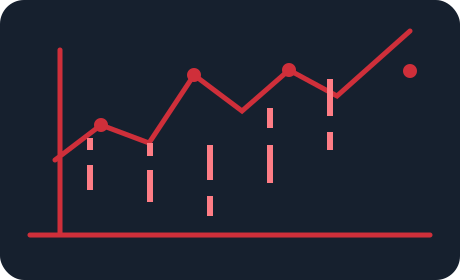
Stock-market chart illustration

Benefits of a structured view

These features aim to save attention and make account information easier to inspect, not to remove market uncertainty.

Continuous monitoring

A watched share can move while you are working or away from the screen. Monitoring rules can surface a selected change without requiring you to refresh a chart repeatedly. Review the alert's threshold and data time before you use it in a decision.

Readable summaries

Price and volume information is more useful when it is presented with the period, currency and comparison clearly labelled. A concise summary can point you to the underlying chart and source rather than pretending to settle the investment question.

Account control

You can review which assets are watched and which alerts matter. Where strategy settings exist, inspect the permissions and limits before enabling an automated action. Keep a record of changes so you can explain what the account did later.

Help with first steps

A real person can explain where to find controls, how to read a report and which document describes a payment rule. Support should clarify a process, not replace your judgment about a stock's value or your ability to bear a loss.

Who may find it useful

A beginner may use the view to learn the difference between a price change and a trading signal. A more experienced user may want to monitor a defined list while focusing their research elsewhere. Someone with limited time may prefer a summary they can review at a planned interval instead of watching intraday movement continuously.

These use cases do not imply equal suitability for trading. A person who cannot tolerate a market loss, needs their money soon or does not understand how an asset is priced may decide to observe without funding. The platform should make that a normal option.

If you already use a broker or exchange, compare the account permissions and data sources before connecting anything. A read-only view can be enough for analysis. Ask whether a connection requires trading authority and what happens if a data feed is interrupted.

How the workflow fits together

Four steps separate account setup from a funded choice.

1Register

Send your contact details and ask who legally provides any funded account. Keep the answer in writing.

2Activate

Complete any required identity steps. Read the account agreement, fee schedule and custody description before depositing.

3Analyze

Choose a stock watchlist, time period and alert conditions. Compare the summary with source data and company news.

4Manage

Review activity, costs and risk limits. Adjust or pause settings when the original plan no longer fits.

Funding, withdrawals and support

The Basic example tier starts at CAD 250, with Advanced at CAD 1,500 and Premium at CAD 5,000. These thresholds are capital amounts in the illustrative fee table, not charges for reading market information. The provider must confirm the actual account terms before payment.

Ask which Canadian-dollar deposit routes are available, whether a card or bank has a separate charge, and how a withdrawal returns to a verified account. The payment guide shows example methods, while the withdrawal policy explains verification and delays.

For help navigating the interface, contact [email protected]. For a transaction or custody question, ask which legal provider owns the record and use that provider's support channel too. Save order confirmations and payment references.

Payment method illustration

How to read a stock signal without overreading it

Suppose a fictional company in a watchlist sees its share price rise while volume is above its recent average. An analytical view may flag the combination. That is a prompt to investigate what changed, not evidence that the share will keep rising. Earnings, a management statement, a sector move or a data error could each produce a similar chart shape.

Check the time and exchange of the quote. A price shown in US dollars can feel different once converted to Canadian dollars and charged a conversion spread. A pre-market quote may have much less liquidity than the regular session. Before an order, look at the bid and ask, not only the last traded price.

Compare a signal with the company's underlying information. Has revenue changed, has debt increased, or has new information altered the outlook? The model may show the market's reaction quickly, but the business question needs a wider view. Record why you would enter a position and what evidence would cause you to leave it.

What a dashboard balance can hide

An account value can combine settled cash, open positions and pending transactions. Those categories have different availability for a withdrawal. A gain displayed on an unsold share is not cash in hand, and a market decline before sale can reverse it. Ask the provider how it calculates the displayed total.

Corporate actions add another layer. A split, dividend or rights issue can change the number of shares, the reference price or the cash balance without representing a simple gain or loss. Verify an unusual line in the provider's statement before assuming the analysis tool made an error.

Review activity and fees together. A series of small orders can create more cost than one measured decision, while a wide spread can matter more than a visible commission. The net result after all charges is the amount relevant to your plan.

Questions to settle with the provider

Ask which markets and order types are actually available to your account, what hours apply and whether a stock is held directly or through another arrangement. Find out how a trade is routed and what happens if the venue is halted or the service is unavailable.

Confirm whether you can receive written statements, how a disputed execution is investigated and which legal entity responds to a complaint. These answers are practical controls. They help you test whether the attractive view on a screen corresponds to a service you understand.

Common stock indicators and their limits

An indicator describes what already happened in the data. The right-hand column is the question to ask before you act on it.

IndicatorWhat it showsWhat it cannot tell you
Trading volumeHow many shares changed hands in a period compared with the recent average.Whether buyers or sellers were more motivated, or why activity rose.
Moving averageA smoothed price line that makes a trend easier to see.When a trend will end. It always lags the latest price.
VolatilityHow widely the price has moved around its recent level.The direction of the next move or the size of a future loss.
Earnings dateWhen a company is scheduled to publish results.Whether the results will meet expectations or how the market will react.
Bid-ask spreadThe gap between the best buy and sell quotes.The price you will actually receive if the quote moves before your order fills.

Mistakes a monitoring tool can encourage

The first mistake is treating a highlighted stock as a verdict. A tool that ranks a list will always put something at the top, even in a week when nothing on the list is attractive. Read the ranking as a way to decide where to spend your own research time, then ask whether the reason behind the ranking would still make sense tomorrow.

The second is checking too often. A watchlist refreshed every few minutes can make ordinary noise feel like news. Many users find a fixed review time, such as once after the Toronto close, produces calmer decisions than reacting to every alert. Choose the schedule before you see the numbers, not after.

The third is ignoring currency. A Canadian investor buying a US-listed share carries two exposures at once: the company and the exchange rate. A gain in the share can be reduced by a weaker US dollar, and a conversion charge applies each way. Look at the result in Canadian dollars before you judge a position.

The fourth is concentration. Three shares in the same sector may move together on the same news. A short watchlist can look diversified on the screen while behaving like a single bet. Check what each name depends on, such as oil prices, interest rates or consumer demand, and note where the dependencies overlap.

A simple weekly review routine

A routine does not need to be elaborate. Write the steps down once, and follow them even when the market feels exciting or frightening. The list below is an example you can shorten, not a method that produces returns.

  1. Open the account summary and note settled cash, open positions and any pending transactions.
  2. Read the fee and activity lines for the week and compare the total cost with what you expected.
  3. Review each alert that fired. Record whether you acted on it and what source you checked first.
  4. Check upcoming earnings dates and corporate actions for the names you hold or watch.
  5. Confirm that your risk limits still match your plan, and pause any setting that no longer does.

If a week passes with nothing to change, that is a legitimate result. A good process is allowed to conclude that you should do nothing.

Questions about stock analysis

How much do I need to begin?

You can read the educational pages without funding. The illustrative Basic account tier starts at CAD 250, but ask the legal provider to confirm its current threshold and any other eligibility rule before paying.

Does AI choose a stock for me?

The tool can organize signals from data such as price and volume. It cannot know your full financial situation, and a highlighted share is not a personal recommendation. Check the assumptions and source information yourself.

Can I monitor without placing trades?

A read-only workflow may meet that need if the feature is available. Review the permissions requested by any connected service. Do not enable order execution merely to see a dashboard.

What if an alert arrives late?

Check the timestamp and current quote at the provider before acting. A delayed alert can be especially misleading during a fast market. Report persistent data discrepancies with the asset name and time.

Are stock prices guaranteed to recover?

No. A company's prospects can deteriorate and a share can lose much or all of its value. Diversification and risk limits may change exposure, but they cannot remove the possibility of loss.

How do I withdraw?

Sell or settle any position as required by the provider, then request a transfer through an eligible route to a verified destination. Identity checks, settlement and the receiving bank can affect timing. Read the provider's specific terms.

Who can explain a fee or order?

Support can help locate the relevant record and fee schedule. The executing provider should explain its own order confirmation and any disputed transaction. Keep the reference number when you contact both teams.

Explore the stock workflow

Review the tools and ask for the provider's documents before you choose whether to fund.

Create Free Account